What is non-medical home care in Philadelphia — and who benefits?
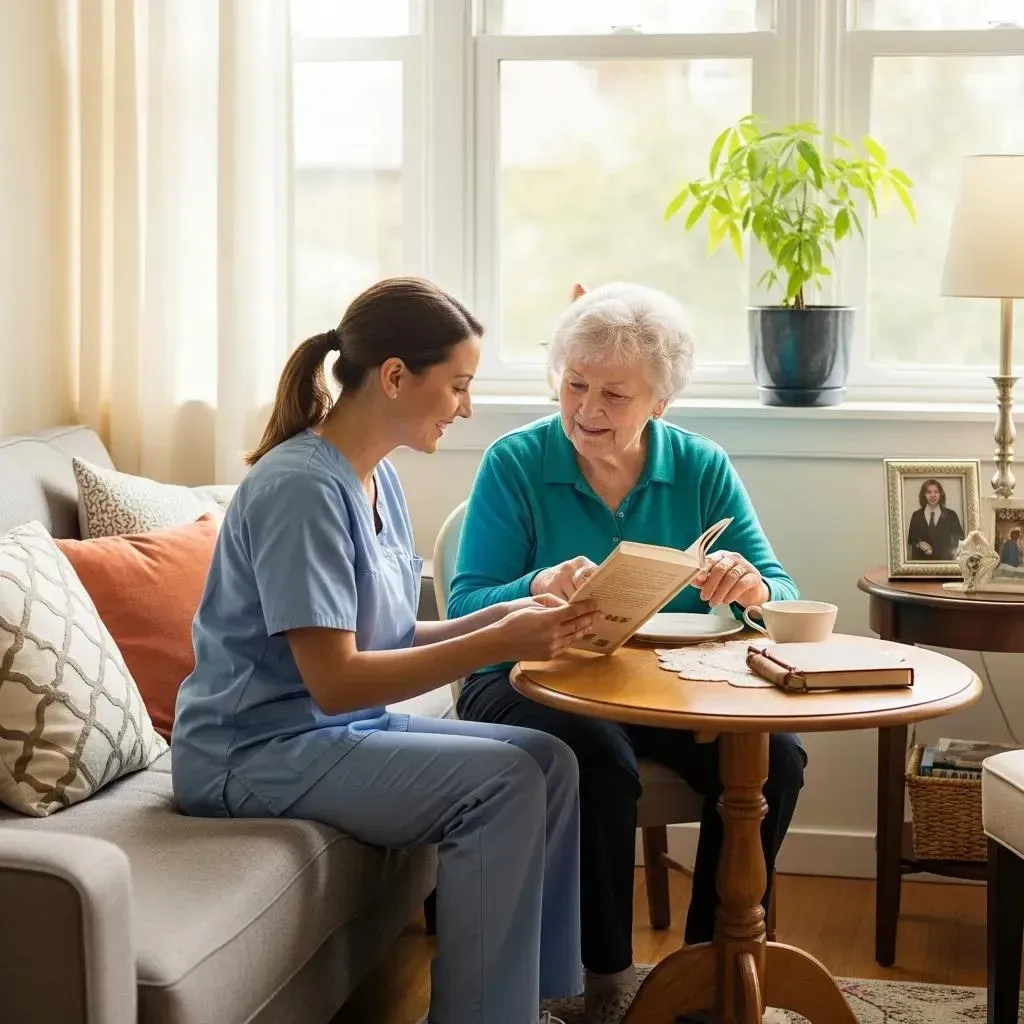
Non-medical in‑home care helps people — especially older adults — stay independent while getting practical support where they feel safest: at home. According to AARP, nearly 90% of adults aged 65 and older want to remain in their homes as long as possible, underscoring the critical role of services that enable aging in place. Below, we explain what non‑medical care means in Philadelphia, which services are commonly offered, and who usually benefits. Caring for an aging loved one can quickly become overwhelming for families; non‑medical care delivers personalized, everyday help so families can breathe easier. You’ll also learn how Home Matters Caregiving approaches this work with dignity and respect. Learn more about us.
What is non-medical in‑home care — and how is it different from medical care?
Non‑medical in‑home care covers practical and personal support rather than clinical treatments. It doesn’t include medical procedures performed by licensed clinicians. Instead, caregivers assist with personal care, companionship, and household tasks that help someone live safely and comfortably at home without needing medical intervention. The U.S. non-medical home care market is projected to grow significantly, with some reports estimating a compound annual growth rate (CAGR) of over 8% through 2030, reflecting a strong and increasing demand for these essential services. For situations requiring a blend of support, we also offer nurse-guided care to ensure comprehensive well-being.
Which services are included in non-medical home care in Philadelphia?

Non‑medical home care in Philadelphia typically includes a mix of practical supports tailored to each person’s needs. Common services include:
- Personal care services: Help with bathing, grooming, and dressing to keep clients comfortable, clean, and safe.
- Companion care: Friendly visits, conversation, and emotional support to reduce loneliness and promote social engagement.
- Daily living support: Meal preparation, light housekeeping, errands, and transportation to appointments or community activities.
Agencies and caregivers customize these services so each person receives the right level of help. Explore additional services.
How does non-medical care support activities of daily living?
Non‑medical caregivers support activities of daily living (ADLs) — the everyday tasks that keep someone independent. Typical assistance includes:
- Bathing and grooming: Practical help to maintain hygiene and personal dignity.
- Meal preparation: Cooking and serving nutritious meals that meet dietary needs.
- Medication reminders: Gentle prompts to take medications on schedule (not administering medications medically).
With this kind of support, many people can remain safely at home longer and enjoy a better quality of life.
Who is non-medical in‑home care for in Philadelphia?
Non‑medical in‑home care serves a wide range of people — most often older adults and people with disabilities — who need help with daily tasks but do not require medical treatment at home.
Which seniors and individuals benefit most from in‑home personal care?
Seniors with mobility challenges, chronic conditions (such as those needing Parkinson's home care assistance), or those recovering from surgery often benefit from in‑home personal care. This support helps them keep their independence while getting practical help for day‑to‑day needs. People with disabilities who want more independence at home also gain from tailored in‑home support.
How does non-medical care support families and caregivers?
Non‑medical care supports families in two important ways: it provides reliable hands‑on help for loved ones and it gives family caregivers much‑needed respite. That break reduces stress and lowers the risk of caregiver burnout. The National Alliance for Caregiving reports that family caregivers provide an estimated $600 billion worth of unpaid care annually, highlighting the immense value and often overwhelming burden they carry without professional support. Caregivers also keep families informed and offer emotional support, which helps relatives feel less alone in managing care.
What are the key non-medical home care services offered in Philadelphia?
Across Philadelphia, non‑medical home care services are organized around practical needs. Typical offerings include:
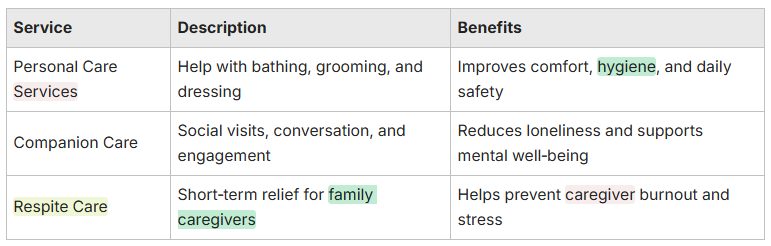
Together, these services create practical, everyday support so clients can remain at home with dignity. For comprehensive, around-the-clock assistance, we also provide live-in care in Philadelphia, as well as in nearby areas like West Chester, Phoenixville, and Chester.
What do personal care services include for seniors?
Personal care for seniors usually covers hands‑on tasks that preserve independence and dignity, such as:
- Bathing and grooming: Assistance with washing and personal care routines.
- Medication reminders: Timely reminders to take prescribed medications as directed.
- Mobility assistance: Support with walking, transferring, and moving safely around the home, including fall prevention strategies.
These basics make daily life more manageable and safer.
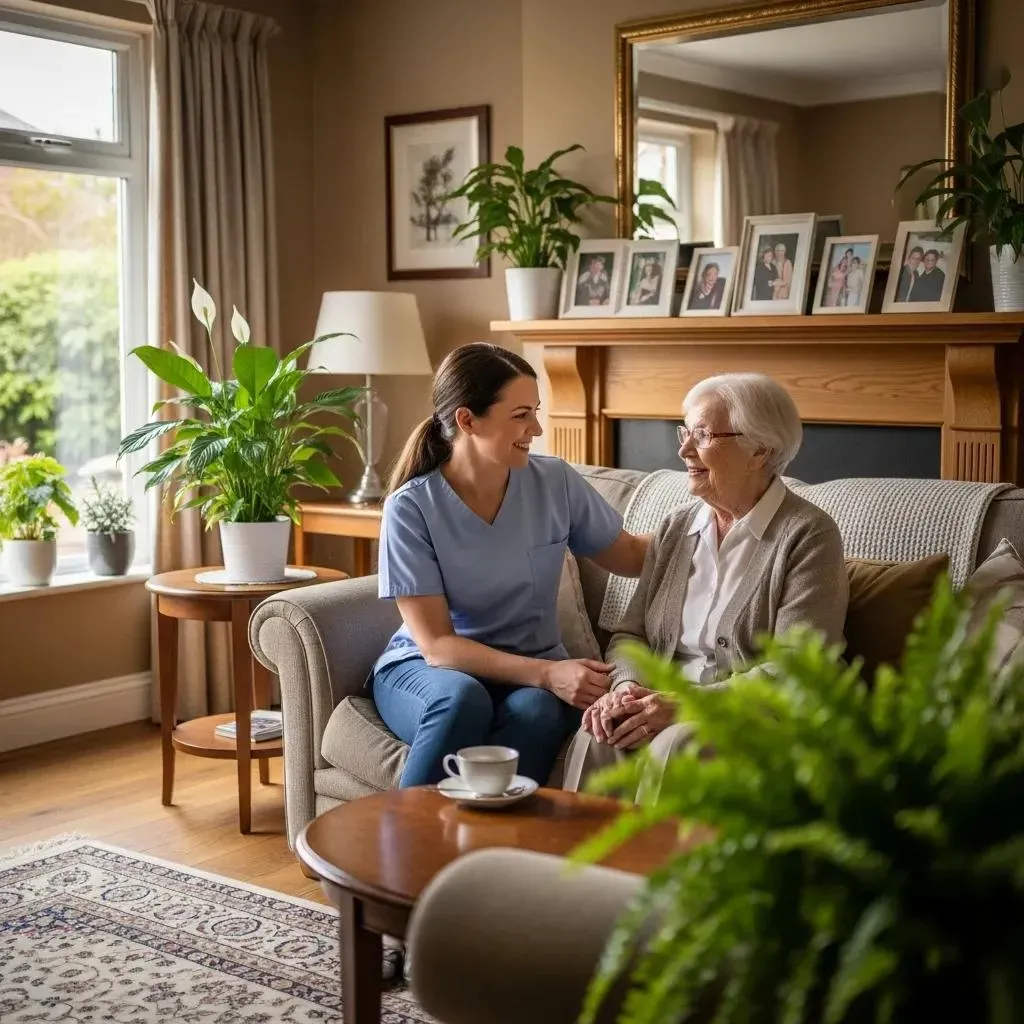
How does companion care enhance emotional and social well‑being?
This is paragraph text. Click it or hit the Manage Text button to change the font, color, size, format, and more. To set up site-wide paragraph and title styles, go to Site Theme.