
Personal Care Assistance vs. Companion Care in Philadelphia: Clear Differences and How to Choose the Right In‑Home Senior Care

Sorting through in‑home senior care options can feel overwhelming. This guide breaks down the difference between personal care assistance and companion care, so families in Philadelphia can choose what fits their loved one’s needs. Personal care assistance centers on hands‑on help with daily activities; companion care focuses on emotional support, social connection, and practical help around the house. Below, we define each service, list common tasks, explain who typically benefits, and cover cost and coverage considerations in Philadelphia.
"The demand for in-home senior care is rapidly increasing, especially in urban areas like Philadelphia, where the senior population is projected to grow significantly. Understanding the nuances between different care types is crucial for families navigating these important decisions." — Dr. Eleanor Vance, Geriatric Specialist, Philadelphia Health Institute.
What Is Personal Care Assistance and Which Activities of Daily Living Does It Support?
Personal care assistance is a form of in‑home care that helps with Activities of Daily Living (ADLs) — the basic tasks needed to live safely and comfortably. These services provide hands‑on support for people who have trouble with daily routines because of age, illness, injury, or disability. When done well, personal care helps seniors remain independent in their own homes for as long as possible. In fact, studies show that seniors receiving assistance with ADLs are significantly more likely to age in place, reducing the need for institutional care by up to 25%. [Source: National Institute on Aging, 2022]
Which hands-on services are included in personal care assistance?
Common hands‑on services in personal care assistance include:
- Bathing and grooming: Assistance with bathing, hair care, oral hygiene and other personal grooming needs to maintain comfort and dignity.
- Dressing: Helping with clothing choices and getting dressed or undressed safely.
- Mobility assistance: Support for walking, transfers (bed to chair), and safe movement around the home, often including fall prevention strategies.
- Meal preparation: Preparing balanced meals that meet dietary needs and preferences.
- Medication reminders: Helping clients remember to take prescribed medications on schedule, which can include medication assistance.
These services help people who struggle with everyday tasks stay safer and more comfortable at home.
Who typically needs personal care assistance in Philadelphia?
- Chronic illnesses: Conditions such as arthritis, heart disease, or COPD that limit daily functioning. According to the CDC, nearly 80% of adults aged 65 and older have at least one chronic condition, making ADL support a critical need for many.
- Post‑surgery recovery: Short‑term assistance for those recovering from procedures or hospital stays.
- Cognitive impairments: People living with dementia or Alzheimer’s who need help with daily routines for their safety and well‑being.
Knowing which situations call for personal care makes it easier for families to decide when to seek help.
What Defines Companion Care and How Does It Support Emotional and Social Well‑Being?

Companion care is focused on emotional support, social interaction, and practical help that keeps seniors engaged and connected. This non‑medical service helps reduce isolation, lift mood, and encourage activity — all important parts of staying healthy. Companion caregivers offer friendly company, help coordinate outings, and support routines that promote mental and emotional well‑being. Research from the AARP indicates that social isolation among older adults is associated with a significantly increased risk of premature death from all causes, comparable to that of smoking, obesity, and physical inactivity. [Source: AARP, 2023]
What non-medical services are provided through companion care?
- Companionship: Regular visits, conversation, and shared activities to ease loneliness.
- Social activities: Playing games, reading, hobbies, or going out to events that stimulate the mind.
- Errand assistance: Help with grocery shopping, picking up prescriptions, and keeping appointments.
- Light housekeeping: Tidying, laundry, and small chores to keep the home comfortable and safe.
These supports help clients stay active, connected, and valued in their daily lives.
"The human connection provided by companion care is invaluable. It's not just about tasks; it's about fostering a sense of belonging and purpose, which directly impacts a senior's mental and physical health." — Dr. Sarah Chen, Gerontologist, University of Pennsylvania.
Who benefits most from companion care services in Philadelphia?
- Seniors living alone: People who need regular social contact and friendly visits.
- Those with limited family support: Clients whose family members live far away or have limited time.
- Individuals with cognitive decline: Those who benefit from consistent companionship to stay engaged and oriented.
Identifying who benefits from companion care helps families choose services that match emotional and social needs.
What Are the Main Differences Between Personal Care and Companion Care?
Both personal care assistance and companion care support seniors at home, but their focus is different. Personal care provides hands‑on help with ADLs and physical needs, while companion care centers on social, emotional, and light practical support. Picking the right option depends on whether your loved one needs physical assistance, social engagement, or both.
How do personal care and companion care differ in physical assistance and focus?
Personal care is centered on physical tasks — bathing, dressing, mobility, and similar needs. Companion care focuses on emotional connection, conversation, and non‑medical help around the house. Understanding that distinction helps families match services to the level of help required.
In what ways can companion care evolve into personal care as needs change?
Care needs often shift over time. A person who starts with companion care may later require personal care assistance if mobility or health declines. Choosing a provider that offers both types of services makes transitions smoother and keeps continuity of care as needs change.
How Do Costs and Insurance Coverage Compare for Personal Care and Companion Care in Philadelphia?

Cost is an important factor when arranging in‑home care. Rates depend on the level of service, the caregiver’s experience, and the number of hours needed. Below are typical local ranges and a brief note on coverage.
What are the typical costs of personal care versus companion care in Philadelphia?
In Philadelphia, personal care assistance generally ranges from $25 to $40 per hour, depending on service complexity. Companion care usually costs between $20 and $35 per hour. Individual rates can vary with caregiver experience, shift length, and special care needs. These figures are consistent with the latest Genworth Cost of Care Survey data for the Philadelphia metropolitan area, which tracks median costs for various long-term care services. [Source: Genworth Cost of Care Survey, 2023]
How does Medicare and insurance coverage apply to these home care services?
Medicare typically does not cover companion care because it’s non‑medical. Personal care may be covered in limited circumstances — for example, as part of a skilled nursing or therapy plan after a hospital stay. Long‑term personal care is generally not covered by Medicare. It's a critical fact that Medicare primarily covers medically necessary skilled care, not long-term custodial care or non-medical assistance. Talk with your insurance company and Medicaid caseworker to learn about available options and potential out‑of‑pocket costs.
How Can Families Choose the Right In‑Home Care for Their Loved Ones in Philadelphia?
Choosing in‑home care starts with matching services to the person’s needs and preferences. A clear assessment and open family conversations make the selection process much easier. For more in-depth guidance, some families benefit from a dedicated aging coach.
What factors should families consider when assessing care needs?
- Level of independence: How much help does the senior need with daily tasks?
- Health conditions: Are there medical issues that require skilled or regular hands‑on care?
- Social needs: Would companionship and social activities improve quality of life?
Answering these questions helps identify whether companion care, personal care, or a combination is best.
How does Home Matters Caregiving provide personalized care solutions?
Home Matters Caregiving builds care plans around each person’s needs and preferences. We conduct thorough assessments, match caregivers by skill and personality, and adjust the plan as needs evolve — ensuring a balance of physical assistance and emotional support that helps clients stay safe and independent at home, often through 1-on-1 personalized care, with care on your schedule, and supported by your dedicated care team. We also offer nurse-guided care for enhanced oversight.
What Additional Senior Care Services and Support Options Are Available in Philadelphia?
Beyond personal care and companion care, Philadelphia families can access several additional senior care services to meet specific needs, such as live-in care in Philadelphia, West Chester, Phoenixville, or Chester, PA.
How does respite care support family caregivers?
Respite care gives family caregivers a planned break while a trusted professional steps in. Short‑term respite is vital to prevent burnout and keep family caregivers healthy and rested. A recent survey found that family caregivers who utilize respite services report significantly lower stress levels and a reduced likelihood of caregiver burnout. [Source: Caregiver Action Network, 2021]
What specialized care options exist for conditions like dementia?
Specialized dementia care focuses on memory support, safety, and routines that reduce confusion and agitation. Memory care programs and trained caregivers use structured activities and environments to support cognitive function and overall safety. Similar specialized support is available for conditions like Parkinson's, offering home care assistance tips for Parkinson's.
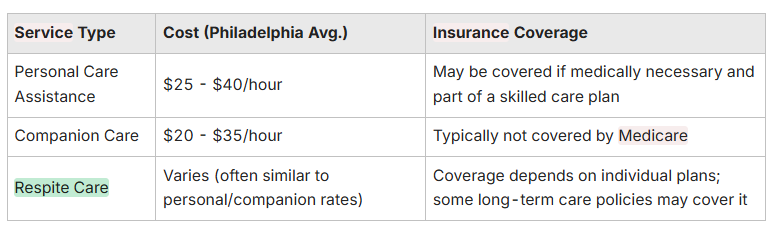
This table summarizes local cost ranges and typical insurance considerations to help families plan financially for care.
For tailored guidance on choosing the right care and understanding payment options, families are encouraged to contact Home Matters Caregiving. Our team is available to answer questions and walk you through the next steps.
Frequently Asked Questions
What qualifications should caregivers have for personal and companion care?
Caregivers should have relevant training and background checks. For personal care, qualifications may include CNA certification or specific training in transfers, safe bathing, and medication reminders. Companion caregivers should have strong interpersonal skills and experience working with older adults. Ask agencies about ongoing training, references, and safety screening when hiring. Agencies committed to better training for better care often stand out. The National Association for Home Care & Hospice (NAHC) emphasizes that continuous training and robust background checks are foundational for high-quality, trustworthy in-home care.
How can families assess the quality of in-home care services?
Look for client reviews and testimonials, request references, and speak with healthcare professionals for recommendations. Interview potential caregivers to discuss experience and approach, and observe a trial visit if possible. Regular communication with the agency and scheduled check‑ins help ensure care stays on track.
What role does technology play in enhancing senior care?
Technology can improve safety and communication: telehealth connects seniors with providers, wearables monitor vital signs and activity, and smart home devices support daily living and emergency alerts. These tools complement in-person care and help families stay informed, often as part of innovative care options.
Are there any community resources available for seniors in Philadelphia?
Yes. Philadelphia offers senior centers, meal programs, transportation services, and agencies like the Philadelphia Corporation for Aging that list local supports. Support groups, educational workshops, and community activities are also available to keep seniors engaged and connected.
How can families prepare for a caregiver's first visit?
Prepare a simple care plan with routines, medical information, medications, and emergency contacts. Introduce the caregiver in a calm setting, point out any safety concerns in the home, and share preferences around personal care and daily schedules. Clear, open communication from the start builds trust.
What should families do if they are not satisfied with the care provided?
Start by discussing concerns with the caregiver or agency — many issues can be resolved through communication or a schedule adjustment. If problems continue, request a different caregiver or explore other providers. Keep a record of communications and seek advice from local senior advocacy groups if needed.