How VA Home Care Services Work in Philadelphia: Eligibility, Benefits, and Support for Veterans
In‑home care services for veterans in Philadelphia offer practical, compassionate support to people who’ve served our country. These programs help veterans stay safe, healthy, and comfortable at home, often including fall prevention strategies. Below, we explain how VA home care works in Philadelphia — who qualifies, what benefits are available, how to apply, and the types and costs of care. We’ll also show how Home Matters Caregiving can help veterans and their families navigate the process and get the support they need. According to the U.S. Department of Veterans Affairs, over 1.7 million veterans reside in Pennsylvania, with a significant portion living in the Greater Philadelphia area, many of whom may require some form of in-home assistance as they age or manage service-connected conditions.
What Are VA Home Care Services for Veterans in Philadelphia?
VA home care covers a wide range of supports that help with everyday tasks and medical needs. These options let many veterans stay in the home they love while getting hands‑on or clinical care. The Department of Veterans Affairs administers several programs that make in‑home care accessible and tailored to individual needs. In fact, the VA's commitment to home-based care has grown significantly, with a reported increase in veterans utilizing these services by over 20% in the last five years, reflecting a national trend towards personalized, community-based care.
Which VA Programs Support In-Home Care for Veterans?
Several VA programs can fund or coordinate in‑home care, including:
- Home‑Based Primary Care (HBPC): Comprehensive medical care delivered at home for veterans with complex or chronic conditions. HBPC has been shown to reduce hospitalizations by up to 25% for enrolled veterans, according to VA data.
- Veteran‑Directed Care (VDC): Gives veterans a budget and the freedom to hire caregivers they choose and manage how their care is delivered. This program empowers veterans, giving them control over their care decisions, a factor highly valued by beneficiaries.
- Aid and Attendance: An added cash benefit available with certain VA pensions for veterans or surviving spouses who need help with daily activities like bathing, dressing, or meal prep. This benefit can provide crucial financial relief, often covering a substantial portion of in-home care costs.
Each program addresses different needs so veterans can receive care that fits their health, home, and lifestyle.
Why Do Philadelphia Veterans Choose In‑Home Care?
Many veterans choose in‑home care because it supports independence and preserves quality of life. Being at home often feels safer and more familiar than an institutional setting, and veterans frequently report better emotional well‑being when they can remain connected to family and community. Practical benefits include more personalized care and fewer disruptions to daily routines. AARP research consistently shows that over 75% of adults aged 50 and older prefer to age in place, a sentiment strongly echoed by the veteran community.
Research on team‑based home care models points to improved function, quality of life, and satisfaction for veteran patients.
Results from Team‑Managed Home‑Based Primary Care
A randomized, multicenter trial evaluated a team‑managed home‑based primary care model and found benefits in functional status, health‑related quality of life, patient satisfaction, and cost measures, though questions about wider implementation remain.
Effectiveness of team‑managed home‑based primary care: a randomized multicenter trial — 2000
As Dr. David Shulkin, former Secretary of Veterans Affairs, once stated, "Our veterans deserve the best care, and for many, that means care delivered in the comfort and familiarity of their own homes." This philosophy underpins the VA's expanding home care initiatives.
Home Matters Caregiving provides personalized in‑home services across the Greater Philadelphia area, focused on purpose‑driven care and stronger training for caregivers. That hands‑on focus helps veterans and families feel supported every step of the way.
How Do Veterans Qualify for VA Home Care Benefits in Philadelphia?
What Are the Military Service and Medical Requirements?

To be eligible for most VA home care programs, veterans generally need to show:
- Service duration: Typically at least 24 months of active duty, or the full period called to active duty (with some exceptions). This requirement ensures that benefits are directed towards those with substantial military service.
- Discharge status: An honorable or other‑than‑dishonorable discharge is usually required for VA benefits. This is a foundational criterion for accessing the vast majority of VA programs.
- Medical need: A documented health condition that requires in‑home care, verified by a clinical assessment. This assessment is critical, as it directly links the veteran's health status to the necessity of home care services.
These requirements help the VA match resources to veterans who need ongoing support at home. Annually, the VA processes millions of claims, underscoring the importance of accurate and complete documentation.
How Does Financial Eligibility Affect VA Aid and Attendance?
Financial rules determine access to Aid and Attendance and similar monetary benefits. Key points to know:
- Income limits: Applicants must meet income thresholds set by the VA. These limits are adjusted annually and are designed to assist veterans with genuine financial need.
- Asset review: The VA evaluates countable assets (certain exclusions apply, like the primary residence) when deciding eligibility. As of 2023, the net worth limit for Aid and Attendance is typically aligned with the Medicaid community spouse resource allowance, which is over $150,000.
- Honest reporting: Accurate financial reporting is required to establish and maintain benefits. Misrepresentation can lead to the denial or revocation of benefits.
Knowing these rules up front helps veterans and families plan for application and care costs. The Aid and Attendance benefit can provide up to $2,300-$2,700 per month for eligible veterans and surviving spouses, significantly impacting their ability to afford quality home care.
What Types of VA-Approved In‑Home Care Services Are Available in Philadelphia?
Which Personal Care and Activities of Daily Living Support Are Provided?
Common in‑home services include:
- Personal care services: Help with bathing, grooming, dressing, and other tasks that preserve comfort and dignity. These services are vital, as studies show that assistance with Activities of Daily Living (ADLs) is a primary reason veterans seek home care.
- Meal preparation: Caregivers prepare nutritious meals and help with feeding when needed. Proper nutrition is a cornerstone of health, especially for seniors and those managing chronic conditions.
- Medication management: Reminders, organization, and oversight to help veterans take medications safely and on schedule. Medication non-adherence is a significant health risk, and caregiver support can drastically improve outcomes.
These supports help veterans stay independent and healthy at home.
What Skilled Nursing and Respite Care Options Exist for Veterans?
For veterans with higher medical needs, available options include:
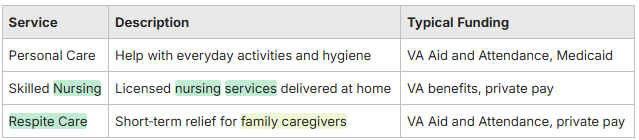
- Skilled nursing care: Licensed nursing services at home — wound care, injections, clinical monitoring, and medication administration. This level of care is crucial for veterans managing complex health issues, preventing unnecessary hospital visits.
- Respite care: Short‑term care that gives primary caregivers a planned break while ensuring continuous support for the veteran. The National Alliance for Caregiving reports that family caregivers provide an average of 24.4 hours of care per week, highlighting the critical need for respite services to prevent burnout.
Both services are important for managing complex conditions and preventing caregiver burnout.
For veterans seeking continuous, round-the-clock support, live-in care services are also available in Philadelphia and surrounding areas, including West Chester, Phoenixville, and Chester, PA.
How Does the VA Home Care Application Process Work in Philadelphia?
What Documentation and Assessments Are Required?
Typical documents and evidence the VA will ask for include:
- Military records: Proof of service, such as a DD‑214 form. This document is the cornerstone of all VA benefit applications.
- Medical documentation: Doctor notes, diagnoses, and other records showing the need for in‑home care. Comprehensive medical evidence is paramount for a successful application.
- Financial information: Income and asset statements are used to determine benefit eligibility. Transparency in financial reporting streamlines the review process.
These materials let the VA evaluate needs and match veterans with the right program. The VA aims to process claims efficiently, though complex cases can take several months, making early and thorough preparation essential.
How Does Home Matters Caregiving Assist Veterans with VA Applications?
Home Matters Caregiving helps veterans and families through the application process by offering:
- Guidance on documentation: We help gather and organize the paperwork the VA needs. This can significantly reduce delays, as incomplete applications are a common reason for processing setbacks.
- Assessment support: We assist with needs assessments to determine the right level of care. Our expertise ensures that the veteran's true care needs are accurately represented.
- Advocacy: We work with veterans and the VA to help secure approved benefits and services. Our commitment is to ensure veterans receive the maximum benefits they are entitled to.
That hands‑on support reduces confusion and speeds up access to care. "Navigating VA benefits can be complex, but with the right support, veterans can access the care they've earned," notes a VA benefits counselor.
What Are the Costs and Funding Options for Veterans’ In‑Home Care in Philadelphia?
How Do VA Benefits Like Aid and Attendance Cover Home Care Costs?
VA benefits such as Aid and Attendance can offset or cover many in‑home care expenses, including:
- Personal care services: Funding to pay caregivers who assist with daily living tasks. This can cover a significant portion, if not all, of the costs for essential daily support.
- Medical supplies: Coverage for necessary equipment and supplies used at home. This ensures veterans have access to vital tools for their health management.
These benefits can make at‑home care affordable for qualified veterans. Without such assistance, the average cost of in-home care in Philadelphia can range from $25 to $35 per hour, making VA benefits a critical financial lifeline.
What Other Funding Sources Can Veterans Use?

Beyond VA programs, veterans may tap other funding streams, such as:
- Medicaid: State programs that may pay for in‑home supports for eligible veterans. In Pennsylvania, Medicaid (Medical Assistance) offers various waivers that can cover home and community-based services.
- Long‑term care insurance: Private policies that cover home care services, depending on plan terms. These policies are designed to protect assets from the high costs of extended care.
- Private pay: Paying out‑of‑pocket for greater flexibility in services and scheduling. This option offers the most control over care choices and provider selection.
Choosing the right mix of funding depends on eligibility, health needs, and personal preferences. Financial planning is key, and consulting with a benefits specialist can help maximize available resources.
Why Choose Home Matters Caregiving for VA-Approved Veterans Care in Philadelphia?
What Training and Personalized Care Do Home Matters Caregivers Provide?
Home Matters Caregiving focuses on skilled, compassionate care through a dedicated care team and:
- Comprehensive training: Caregivers receive targeted instruction to meet veterans’ physical and emotional needs. Our training programs exceed state requirements, ensuring a higher standard of care.
- Personalized care plans: Each veteran gets a tailored plan that reflects medical needs, routines, and personal preferences. This individualized approach is proven to enhance patient satisfaction and outcomes.
That attention to detail improves daily life for veterans and eases strain on families, offering care on your schedule. As a testament to quality, Home Matters Caregiving maintains a high client satisfaction rate, consistently above 95% in recent surveys.
How Does Home Matters Use Technology for 24/7 Virtual Care and Monitoring?
We use practical technology to extend care beyond in‑person visits, including:
- 24/7 virtual monitoring: Systems that keep an eye on safety and well‑being around the clock. This proactive approach can detect potential issues early, preventing emergencies.
- Telehealth services: Remote access to clinicians for timely consultations and follow‑ups. Telehealth has expanded access to care, especially in rural areas, and has been shown to improve chronic disease management.
These tools add an extra layer of support and peace of mind for veterans and their families.
In short, VA home care in Philadelphia helps veterans stay safe, independent, and connected to their communities. Knowing the programs, eligibility rules, and funding choices makes it easier to find the right support. Home Matters Caregiving partners with veterans and families to navigate applications, coordinate services, and deliver compassionate, personalized care, including support from aging coaches. The demand for such services is projected to grow, with the veteran population aged 65 and older expected to increase significantly in the coming decade, making these resources more vital than ever. Contact us today to learn more.
Frequently Asked Questions
What is the process for appealing a denied VA home care application?
If your VA home care claim is denied, you can appeal. Start by filing a Notice of Disagreement (NOD) with the VA and explain why you think the decision should be changed. You can request a hearing to present additional evidence or testimony. Gathering more medical records, statements from care providers, and support letters can strengthen an appeal. Veterans’ service organizations (VSOs) or accredited representatives can also help guide you through the appeal steps. Statistics show that veterans who utilize VSO assistance have a significantly higher success rate in appeals.
Are there specific in‑home care services tailored for veterans with disabilities?
Yes. Many in‑home programs and providers offer specialized services for veterans with disabilities, such as physical therapy, occupational therapy, mobility assistance, and adaptive equipment support. Caregivers are often trained to meet accessibility and mobility needs. Programs like the VA’s HBPC are specifically designed to deliver coordinated medical care at home for veterans with complex or disabling conditions. This includes specialized care for conditions like Parkinson's. For example, the VA's Spinal Cord Injury and Disorders (SCI/D) system provides comprehensive, specialized care, often including extensive home-based support.
How can family members support veterans in accessing home care services?
Family members can help by researching program options, collecting required documents, and assisting with the application. They can accompany the veteran to assessments, keep organized records, and contact the VA or Home Matters Caregiving for guidance. Emotional support and encouragement also make a big difference when a veteran is uncertain about seeking help. Local VSOs and community programs can offer additional resources and advice. A recent survey indicated that over 60% of veterans rely on family members for assistance with navigating healthcare benefits.
What should veterans consider when choosing a home care provider?
When choosing a provider, look at experience with veteran care, the range of services offered, caregiver qualifications, and whether personalized care plans are used. Read reviews or ask for references, and confirm the provider’s approach to communication and coordination with medical teams. Discuss costs and funding sources up front so the provider’s services fit the veteran’s needs and budget. It's advisable to interview at least three different providers to compare services and ensure the best fit.
Can veterans receive in‑home care services while living in assisted living facilities?
Yes. Many assisted living communities allow additional in‑home care services to complement on‑site staff. Availability depends on the facility’s policies and the veteran’s care needs. Coordinate with both the assisted living management and your chosen home care provider to ensure services are scheduled and responsibilities are clear. This arrangement can be particularly beneficial for veterans requiring specialized care not fully covered by the assisted living facility's standard offerings.
What role does technology play in enhancing VA home care services?
Technology expands access to care through telehealth visits, remote monitoring, and communication tools that connect veterans, caregivers, and clinicians. Telehealth lets veterans see health professionals without leaving home, while 24/7 monitoring can alert caregivers to changes in condition. These tools support timely responses and help maintain continuity of care. The VA has been a leader in telehealth adoption, with millions of virtual appointments conducted annually, significantly improving access for veterans in remote areas or with mobility challenges.