
Support for Family Caregivers

Respite care gives family caregivers planned, temporary relief from daily duties so they can rest, run errands, or handle appointments — and it’s a key way to keep care at home sustainable. According to the AARP, approximately 53 million Americans are family caregivers, providing an estimated $600 billion in unpaid care annually. This guide explains what respite care looks like in Philadelphia, how it helps both caregivers and loved ones, and how to arrange dependable short-term support. You’ll find the core features of respite services, clear benefits backed by practice and research, the local service formats available, realistic cost expectations and funding paths, plus neighborhood resources. We also include straightforward steps for booking a few hours of in-home help, an overnight stay, or emergency coverage so families can act with confidence.
What Is Respite Care and How Does It Provide Relief for Family Caregivers in Philadelphia?
Respite care is short-term help for someone who normally receives care from a family member. It works by temporarily shifting daily tasks to a trained provider so the primary caregiver can rest, attend appointments, or manage personal responsibilities. Respite reduces cumulative burden through scheduled physical rest, mental recovery from ongoing stress, and time to handle household or medical needs. In Philadelphia, respite is available in homes, adult day centers, and residential settings, giving families options that match the care recipient’s needs. Evidence and local practice show that even a few dependable hours each week can lower caregiver stress and strengthen their ability to provide consistent, long-term care. As Dr. Carol Levine, Director of the Families and Health Care Project at the United Hospital Fund, states,
"Respite care is not a luxury; it is a necessity for caregivers to sustain their vital role without sacrificing their own health and well-being."
What Are the Key Features of Respite Care Services?
Effective respite programs share practical features: flexible scheduling, trained staff who provide personal care and companionship, and safety procedures for both in-home and facility settings. Flexibility can mean hourly visits, overnight stays, or multi-day coverage depending on the situation. Staff usually undergo background checks and basic caregiving training, use medication reminders when needed, and follow emergency escalation plans to keep care continuous. Providers put these elements into a written care plan that outlines tasks, daily routines, and contingency steps — so you can step away knowing essentials like personal care, mobility assistance, and medication checks are handled. Knowing these features helps families pick respite that balances comfort, safety, and real relief.
How Does Respite Care Prevent Caregiver Burnout and Stress?

Respite care interrupts ongoing stress and gives caregivers time to recover physically and mentally, which reduces burnout risk and supports long-term health. Short breaks allow for sleep, medical visits, social connections, and self-care — activities that lower stress hormones and lift mood. Respite addresses common burnout symptoms such as exhaustion, irritability, trouble focusing, and worsening personal health. Regular, planned relief also helps caregivers make calmer decisions and return to caregiving with more patience and energy, which improves the care their loved one receives. Over time, this creates a more stable caregiving arrangement with fewer crises for the whole family.
Caregiver Burnout: What It Looks Like and Why It Matters
Caregiver burnout is a deep physical, emotional, and mental exhaustion that can happen when the demands of caregiving overwhelm a person’s ability to cope. Left unaddressed, it often leads to worsening health and reduced capacity to meet caregiving responsibilities. Studies show that up to 70% of family caregivers experience symptoms of depression, and a significant percentage report high levels of stress and burnout. (Source: National Alliance for Caregiving and AARP, Caregiving in the U.S. 2020)
If you’re choosing a local provider that wraps these features into short-term options, Home Matters Caregiving is noted locally as a Philadelphia-based service offering flexible respite: hourly visits, overnight coverage, and temporary in-home relief. Look for providers who build personalized respite plans, emphasize reliable scheduling, and staff trained caregivers — those are the services most likely to give you real rest and consistent follow-through.
What Are the Main Benefits of Respite Care for Family Caregivers and Loved Ones?
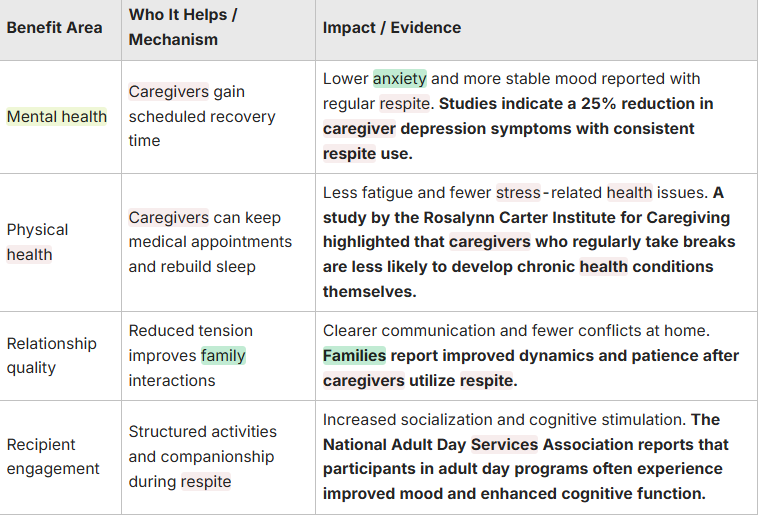
Respite care boosts caregiver well-being and the recipient’s quality of life through measurable changes like lower stress, better sleep, and improved access to health services. Research published in the Journal of the American Geriatrics Society found that caregivers who utilized respite services reported significantly lower levels of stress and depression compared to those who did not. Caregivers often see mental and physical health gains, while recipients benefit from social engagement and structured activity. Respite also frees caregivers to manage appointments, legal or financial tasks, and work commitments without interrupting care. By strengthening caregiver capacity and providing professional backup, respite reduces the chance of unexpected institutionalization and helps families keep loved ones at home longer.
Respite care provides several direct benefits:
- Less caregiver stress and anxiety thanks to predictable time away for rest and appointments.
- Better physical health for caregivers by enabling sleep, exercise, and preventive care.
- More social and cognitive engagement for recipients during supervised visits or adult day programs.
The table below shows how these benefits translate into practical outcomes for families.
Different benefits of respite care work through clear mechanisms that lead to measurable improvements for both caregivers and recipients.
How Does Respite Care Improve Caregiver Mental and Physical Health?
Respite care carves out predictable time for restorative activities — sleep, exercise, medical care, and social contact — that reverse the wear-and-tear of chronic caregiving stress. Regular breaks disrupt stress-hormone cycles, improve sleep, and let caregivers keep up with their own preventive care, lowering long-term health risks. Behaviorally, respite reduces irritability and cognitive overload, which helps caregivers make clearer decisions and stay patient. When caregivers use respite to attend therapy or routine appointments, they sustain their role longer and protect their health. In short, respite is preventive care for the caregiver as much as it is support for the family.
Respite Care Reduces Burnout and Expands Access
Respite care services have been shown to lower caregiver burnout and, in some cases, expand access to low- or no-cost respite options for eligible families. A national survey found that caregivers who used respite services were 30% less likely to report high levels of emotional stress.
In What Ways Does Respite Care Enhance the Well-being of Care Recipients?
Respite care supports recipients by offering consistent routines, social interaction, and trained staff who can deliver specific services — like mobility help, light exercise, or memory-focused activities — the primary caregiver may not be able to provide at all times. Adult day programs and in-home respite give companionship and stimulating activities that reduce isolation and can slow functional decline. Short facility stays or overnight respite provide extra monitoring after surgery or when temporary medical oversight is needed. Keeping routines and supervision in place lowers risk and supports emotional and cognitive health while families reorganize supports.
What Types of Respite Care Services Are Available in Philadelphia?

Caregivers in Philadelphia can choose several respite formats, each suited to different needs, durations, and settings. Typical options include in-home respite, facility-based short stays, adult day services, overnight respite, and emergency or short-notice help. In-home care works well when familiar surroundings and personalized routines matter; facility options provide structured activities and medical oversight for higher-acuity needs. Emergency and short-notice options exist but can be limited without prior planning, so preparing ahead improves access to reliable support. As a representative from the Philadelphia Corporation for Aging (PCA) noted,
"Providing a spectrum of respite options is crucial because every caregiving situation is unique, requiring tailored support to truly make a difference."
The following comparison clarifies typical settings and when each type is appropriate.
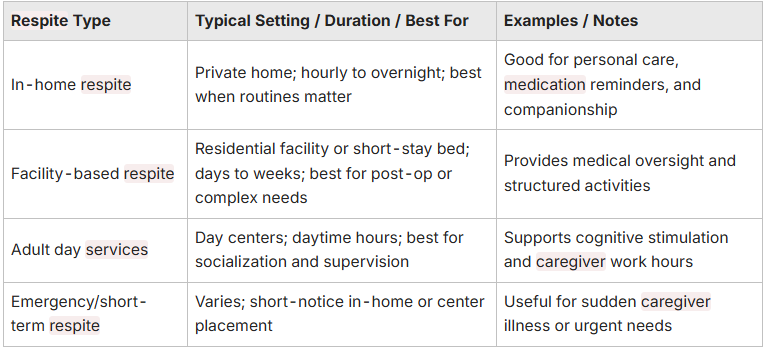
Choosing the right type depends on medical complexity, behavioral needs, and the caregiver’s goals for the break. Planning ahead expands options and reduces stress during emergencies.
Home Matters Caregiving offers local examples of in-home and short-term respite that match the types above — flexible hourly visits and overnight coverage that show how families can arrange temporary home care. Ask providers whether they offer dementia-friendly companionship or post-op monitoring to ensure the respite you choose supports both safety and meaningful engagement.
How Do In-Home Respite Care and Facility-Based Care Differ?
In-home respite happens in the recipient’s familiar setting and focuses on comfort, routine, and minimal disruption — ideal when the home is safe and individualized attention matters. Facility-based respite takes place in a structured environment with scheduled activities, staff available for medical oversight, and resources for higher-acuity needs. In-home care usually means one-on-one attention; facilities offer group engagement and clinical backups. Weigh preference, clinical complexity, and the caregiver’s goals when deciding between them.
Respite Care for People Living with Dementia
Reviews of respite interventions for caregivers of people with dementia examine effects on caregiver well-being, care recipient outcomes, and healthcare use. Studies have shown that regular respite can delay institutionalization for individuals with dementia by an average of 1.5 years.
What Emergency and Short-Term Respite Care Options Can Caregivers Access?
Emergency respite includes short-notice in-home visits from agencies with rapid response teams, adult day centers that accept emergency intake, and short-term facility stays when clinical oversight is needed. To secure emergency respite faster, keep an updated care plan, a list of potential providers, and documentation of medical needs on hand. A prepared checklist with medications, daily routines, and emergency contacts smooths transitions and cuts intake time. Advance planning increases the odds of getting reliable help when time is tight.
How Much Does Respite Care Cost in Philadelphia and What Funding Options Exist?
Respite costs in Philadelphia vary by service type, duration, and care level. In-home services usually charge hourly rates while facilities and adult day programs use daily or per-session fees. Price depends on caregiver qualifications, hours needed, overnight coverage, and specialized services like dementia care. According to the Genworth Cost of Care Survey 2023, the median hourly cost for in-home care in Philadelphia is approximately $30, while adult day health care averages around $80 per day. Funding can come from private pay, Medicaid waivers, veteran caregiver programs, long-term care insurance (when applicable), and some nonprofit or sliding-scale supports. Eligibility varies, so check programs early and gather required documentation. Clear cost planning helps families use respite regularly without unexpected bills.
Below is a concise table outlining common payment sources and practical next steps.
Common payment sources and suggested steps to check eligibility are summarized for caregiver planning.
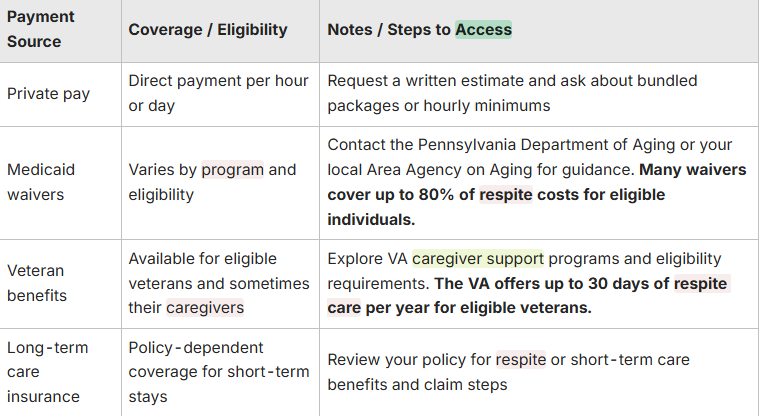
Ask providers for itemized estimates and check local assistance programs so you can plan regular respite without undue financial strain.
What Are the Average Rates for In-Home and Facility-Based Respite Care?
Rates vary by provider and care intensity. In-home care is usually billed hourly; facilities and adult day programs charge by day or session. Costs reflect caregiver training, hours, night coverage, and specialized services. To compare accurately, request sample invoices, ask about minimum visit lengths and cancellation policies, and confirm any travel or specialty fees. Comparing several local quotes helps you estimate monthly respite expenses and spot cost-saving options like packaged weekly visits.
Which Insurance and Assistance Programs Help Cover Respite Care Costs?
A range of public and private programs may help with respite, though coverage rules differ. Pennsylvania Medicaid waiver programs can fund home- and community-based services for eligible people. VA caregiver benefits may cover respite for qualifying veterans and some caregivers. Long-term care insurance sometimes includes short-term or facility respite if the policy specifies it. Practical next steps: contact the Pennsylvania Department of Aging, review VA caregiver resources, and read your insurance policy closely to identify covered services and claims procedures.
What Local Resources and Support Programs Are Available for Family Caregivers in Philadelphia?
Philadelphia has community supports — senior centers, caregiver groups, and municipal aging services — that pair well with respite care by offering social programs, education, and referrals to vetted providers. Local agencies and nonprofit directories list adult day programs, volunteer companionship, and transportation and meal services that reduce caregiver tasks. Search by neighborhood and service type through official directories or municipal aging resources to find options that fit schedules and accessibility needs. Many providers, including Home Matters Caregiving, also offer valuable online resources to help families navigate care options. These programs extend the benefits of respite by handling practical burdens like meals and rides, creating a more complete support network. Studies indicate that caregivers participating in support groups report a 25% reduction in feelings of isolation and an increased sense of coping ability.
Use this quick checklist when looking for neighborhood supports.
- Find local aging services or senior centers that provide referrals and program listings.
- Search for adult day programs that accept new participants and offer trial days.
- Look for caregiver support groups that share peer advice and stress-management tools.
These steps generate immediate leads and help families combine respite with local programs that address transportation, nutrition, and education needs, building a stronger care plan.
Where Can Caregivers Find Support Groups and Senior Centers in Philadelphia?
Locate support groups and senior centers through local aging services directories and municipal program listings. Search by neighborhood and service type to find options close to home and convenient for your schedule. Many organizations run weekly or monthly groups focused on caregiver stress, dementia care techniques, and practical skills, while senior centers offer daytime social and wellness activities for care recipients. Contact program coordinators about intake, transportation, and trial visits so you can evaluate fit before committing.
How Do Philadelphia-Based Programs Complement Respite Care Services?
Community programs fill gaps beyond direct caregiving: transportation reduces caregiver errands, meal delivery maintains nutrition on respite days, and caregiver education boosts confidence in handling complex needs. Together, these services cut the total hours a family member must provide, making scheduled respite more effective and sustainable. Coordinating respite with community supports builds redundancy, eases access during vacations or emergencies, and strengthens long-term home care arrangements.
How Can Family Caregivers Book Respite Care Services with Home Matters Caregiving?
Booking respite usually follows a simple path: initial contact, a care assessment, a customized plan, confirmed scheduling, and follow-up to make sure the service met your needs. Home Matters Caregiving is a local example of a Philadelphia provider that offers short-term respite; the steps below mirror the typical process and the information providers will ask for to ensure a smooth experience and meaningful relief.
Follow these steps to schedule respite efficiently:
- Initial inquiry: Share basic details about the care recipient, current challenges, and preferred timing so the provider can assess fit.
- Care assessment: Provide medical needs, daily routines, medication lists, and safety concerns to build a tailored plan.
- Plan creation: Work together on a written respite plan that lists tasks, schedules, and contingency steps for the caregiver and respite worker.
- Scheduling and confirmation: Choose dates, confirm staffing and travel logistics, and complete any required paperwork for the first visit.
- Follow-up and adjustment: After the first visits, review outcomes and tweak the plan to improve comfort and effectiveness.
These steps reduce last-minute friction and increase the chances that your respite time is true recovery time.
What Are the Steps to Schedule Customized Respite Care in Philadelphia?
Start with an initial call to describe needs, then complete an assessment that records medications, mobility limitations, and daily preferences. The provider will draft a written plan specifying tasks, visit length, and emergency steps for you to review. On the scheduled day, the respite worker follows the plan and reports back on outcomes; a short follow-up call helps refine future visits. Preparing medication lists and key routines ahead of time speeds intake and improves the first respite experience.
How Does Home Matters Caregiving Ensure Professional and Compassionate Care?
Local descriptions of Home Matters Caregiving emphasize person-centered planning, trained staff, and clear safety protocols when arranging short-term respite. Quality measures to ask about include background checks, caregiver training in personal care and dementia awareness, supervision and shift briefings, and written care plans that honor routines and preferences. Families should ask providers about training, supervision, and how they handle unexpected situations to confirm the respite option matches both clinical and emotional needs.
If you’re ready to arrange short-term relief, follow the scheduling steps above and choose providers who prioritize training, communication, and customizable plans — that approach gives you the best chance of real rest and sustained caregiving capacity.
Frequently Asked Questions
What qualifications should I look for in respite care providers?
Look for caregivers who have passed background checks, received training in personal care, and have experience with specific needs like dementia or mobility assistance. Ask whether they follow written care plans and how they handle emergencies. Good providers communicate clearly and have references or reviews you can check. Many reputable agencies require caregivers to complete at least 40 hours of specialized training annually.
How can I prepare my loved one for respite care?
Talk openly with your loved one about the plan, introduce the caregiver ahead of time when possible, and share routines and preferences. A meet-and-greet and a simple written routine help reduce anxiety and make the first visits smoother.
Are there specific times when respite care is most beneficial?
Respite is especially helpful during times of high stress — after major life changes, during illness, or when caregivers feel overwhelmed. It’s also valuable for planned needs like holidays or appointments. Regular short breaks, even a few hours weekly, help prevent burnout over time. Experts recommend proactive, scheduled respite rather than waiting for crisis points, as it is more effective in preventing caregiver burnout.
What should I expect during a respite care visit?
Expect the caregiver to follow a prearranged plan that covers daily tasks like bathing, meals, medication reminders, and companionship. They should engage your loved one in safe, meaningful activities and report back on how the visit went and any observations about health or mood.
How can I find reliable respite care services in my area?
Search local agencies, online directories, and referrals from healthcare professionals. Contact municipal aging services or caregiver support groups for vetted recommendations. Interview multiple providers, check credentials and references, and ask about training and supervision before hiring.
What are the potential challenges of using respite care?
Adjusting to a new caregiver can be hard for both the care recipient and the family. Finding the right match takes time, and availability can be limited for short-notice needs. Open communication, a trial visit, and a clear care plan help ease the transition and improve the experience.